How to Send a Drawing for a CNC Machining Quote: What JST Needs Before We Can Price It
The problem: you asked for a price and got questions back.
You sent a part for quoting and the reply was not a price — it was a list of questions. Or the price came back, but only after days of back and forth. The doubt behind that is a fair one: is the supplier slow, or is something missing from what I sent? In the cases JST sees, it is usually the second. A quote is only as good as the drawing behind it, and most slow quotes are slow because the drawing leaves out the one thing that decides the price. The customer in this case is not a beginner — they have a part, they know what it does, and they need a price they can plan around. What they need from the supplier is not speed for its own sake. It is a quote that was worked out once, from a complete drawing, so the price they accept is the price they pay.
A price worked out from a guess is a price that changes.
A turned part looks simple, and that is exactly why it is easy to misprice. Two parts that look alike can differ many times over in machining time once the tolerance and the material are known. A price given without those answers is a guess, and a guess is revised later — the tolerance turns out tighter than assumed and the price goes up, or the part is made to a precision it never needed and the customer pays for work it did not require. The fix is not to quote faster. It is to send a drawing that answers the questions before they are asked.
The evidence: look at a turned nozzle, and count what its drawing has to say.
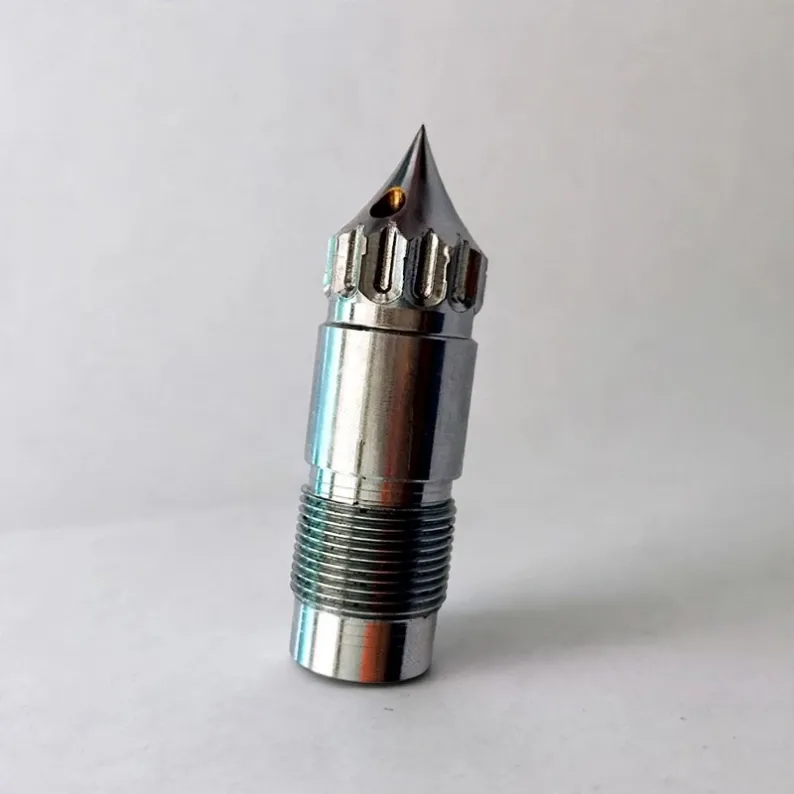
The CNC Turned Precision Nozzle with Threaded Base is a single steel-coloured turned part: a threaded base, a grooved ring in the middle, a pointed tip with a side hole. To price it, the drawing has to answer a question for every one of those features — what thread, what tolerance on the tip, what the groove is for, what material. None of that is visible in a photo of the part. A photo shows the shape; it does not give a size, a tolerance or a material. The second turned part in this case, the fitting in the image below, makes the same point from the other side: a hollow fitting with a threaded end and flat sections, whose price also turns on the material and the tolerance of its bore, neither of which a photo can show. Every item on the checklist below is a question we would otherwise have to ask you, and every question asked is time the quote waits.
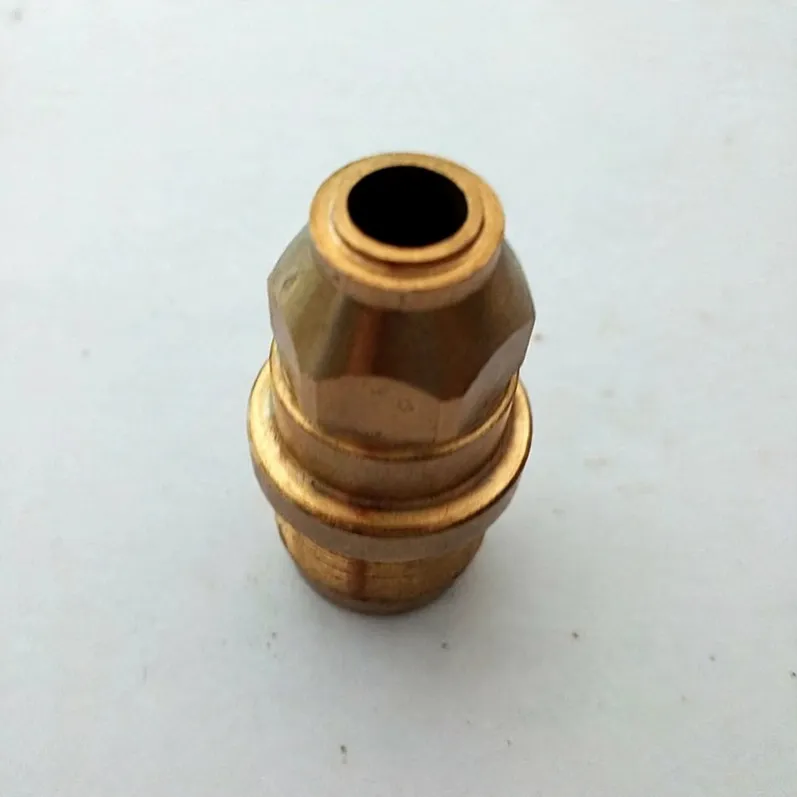
Custom-made to customer drawing. JST Machining provides precision CNC machining services. Send your drawing for a quote.
What the drawing has to say.
First, the material. The drawing states the exact grade — not "metal" or "aluminium" — and the material supplied has to match it. If the material is still undecided, say so in the enquiry. The options can be discussed, but a grade is not picked for you without asking. Second, the tolerance and the precision it demands. Mark which dimensions are critical and which tolerance applies to each, and let a general tolerance note cover the rest. A turned part is judged by its bore, its thread and its tip — the features that mate with something else. Writing "tolerance as tight as possible" does not help: it tells the machinist nothing about which face actually matters. Third, the surface treatment and hardness, when they apply. Anodising, plating, polishing, heat treatment — only if the part needs them. If the drawing does not call for them, do not assume they are included in the price. Fourth, the quantity and the use. One prototype, a small batch and a repeat order are priced differently. Give the first quantity and, if you know it, the expected repeat quantity. One sentence about where the part is used — a fixture, a mould insert, a drone frame, a camera part — prevents a wrong assumption, because parts that look similar are inspected differently when they are used differently.
Send this first — the checklist.
- The drawing: 2D with dimensions, tolerances and surface-treatment notes, plus a 3D file when you have one. The 3D file helps; the 2D drawing decides.
- The material: the exact grade on the drawing. If it is still undecided, say so.
- The quantity: the first quantity, and the expected repeat quantity if you know it.
- The critical dimensions: which dimensions matter most, and which tolerance applies to each.
- Surface treatment and hardness, when they apply — only if the part needs them.
- Where the part is used: one sentence about the application.
What happens when something is missing.
We ask you instead of guessing. A tolerance guessed wrong means a part that does not fit, or a price for a precision the part never needed. If you do not know a value yet — for example the final material — say so in the enquiry and we will quote the options that are still open.
Common mistakes to avoid.
- Sending only a photo, with no dimensions. A photo shows the shape, not the size, tolerance or material — send the drawing with it.
- Sending a 3D file with no 2D drawing. Without the drawing we cannot see the tolerances or the surface-treatment notes.
- Writing "tolerance as tight as possible". Mark the dimensions that are actually critical and let the general tolerance cover the rest.
- Asking for a price "for a part like this". Two parts that look alike can differ many times over in machining time once tolerance and material are known.
What you get back.
When the drawing is complete, the quote is worked out from it once — and the price you accept is the price for the part as drawn. When you accept, machining follows the same four steps as in Article 1: drawing review, machining, inspection before delivery, and delivery. The parts in the CNC Turning Parts and Precision Mold Components categories are quoted the same way.
FAQ
Q: Can I send a photo instead of a drawing?
A: A photo helps us see the shape, but it cannot be quoted from — it gives no size, tolerance or material. Send the drawing with the photo, and we can quote from the drawing.
Q: What should I send first — a 2D drawing or a 3D file?
A: Send the 2D drawing first. It carries the dimensions, tolerances and surface-treatment notes, and it is what the quote is worked out from. A 3D file helps, but it does not replace the drawing.
Q: What if something on my drawing is unclear?
A: We ask you instead of guessing. Tell us what is still undecided in your enquiry, and we will quote the options that are still open.
Q: Do I need to mark a tolerance on every dimension?
A: No. Mark the dimensions that are actually critical and let a general tolerance note cover the rest. Tight everywhere costs time and money and says nothing about which face matters.
Q: Can I change the drawing after I get a quote?
A: A change to the material, a critical dimension or the treatment makes it a different part. Send the revised drawing and we will work out a new quote from it.
Q: What quantity should I ask for a price on?
A: Give the first quantity, and the expected repeat quantity if you know it. One prototype, a small batch and a repeat order are priced differently.
Gather the items on the checklist above, then send the drawing and quantity through the Contact page or to info@jstmould.com. If anything on the list is still undecided, say so in the enquiry — we will quote the options that are still open rather than guess.