Precision CNC Machining at JST: From Your Drawing to Inspected Parts
The problem: an insert that does not fit is not a small error.
A mould insert lives in a pocket, and its job is to form plastic in exactly the right place. If it is a little out — a forming face in the wrong place, a locating face that does not sit flat — the mould still runs, but every part it makes carries the same fault. That is the problem JST Machining sees again and again: a customer needs an insert remade from the drawing, a replacement for one that has worn out, or the accessories that go with a mould they already run. In each version the doubt is the same: will the new part actually fit, or will we only find out on the trial that it does not? A buyer who has already paid for one insert that did not fit is not looking for a promise. They are looking for a process that catches the error before the part is made, and for proof that the part was checked before it was sent.
What your drawing has to say.
A part like this is decided by the drawing, not by the machine. Before anything is quoted, the drawing has to answer four questions — and if it does not answer them, we ask instead of guessing. First, the material. The drawing states the exact grade — not "steel" or "metal", but the grade the mould needs — and the material supplied for the part has to match it. If the material is still undecided, say so in the enquiry; the options are discussed before machining, not decided for you without asking. Second, the tolerance. The drawing marks which dimensions are critical and which tolerance applies to each: the forming surfaces, the faces that locate the block in the mould pocket, and the hole pattern that fixes it in place. A general tolerance note covers the rest. Tight everywhere costs time and money; tight on the wrong face buys nothing. The faces that decide whether the insert fits are the ones to mark. Third, precision where it counts. An insert is judged by its fit, and fit is a property of a few faces, not of the whole block. The cavity that forms the plastic, the ribs that shape it, and the locating faces that sit against the pocket are the features the inspection has to cover. Fourth, the surface treatment and hardness, when they apply. If the drawing calls for a treatment, it is part of the order; if it does not, it is not assumed. Hardness is taken from the drawing, never substituted.
How JST solves it: drawing first, then machining, then inspection.
JST Machining is the precision machining side of the JST group. The work is custom machining to customer drawings, in two lines: precision machining accessories for injection moulds, and machined products for automation, robotics, drones, digital cameras and other equipment. There are no off-the-shelf standard parts here. An order runs in four steps.
Step one, send the drawing. A 2D drawing with dimensions and tolerances, plus a 3D file when you have one, is the fastest starting point. State the material, the quantity and where the part will be used, if they are on the drawing.
Step two, the drawing is reviewed for manufacturability before quoting. The check is whether the features on the drawing can be machined as drawn, and anything unclear is asked about instead of guessed.
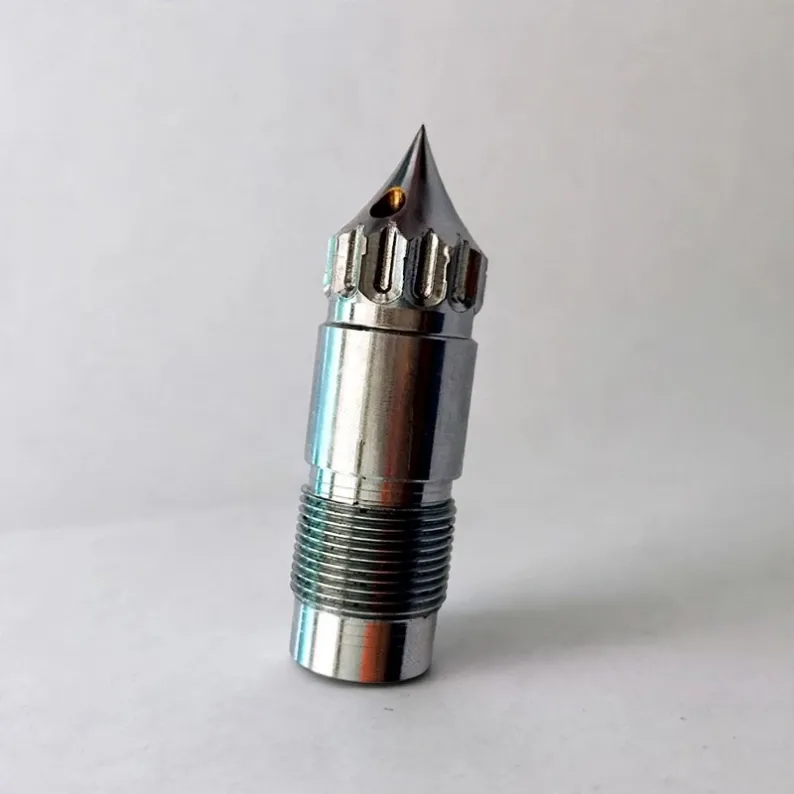
Step three, machining. Parts are made by CNC turning and machining, with fixtures and jigs made in-house where a part needs dedicated holding or positioning. Mould components such as inserts are machined to the same process, and turned mould cores are made the same way — the core in the image below is one such part, a stepped, round mould core with a flange base. The drawing decides the shape, and the critical faces decide the inspection.
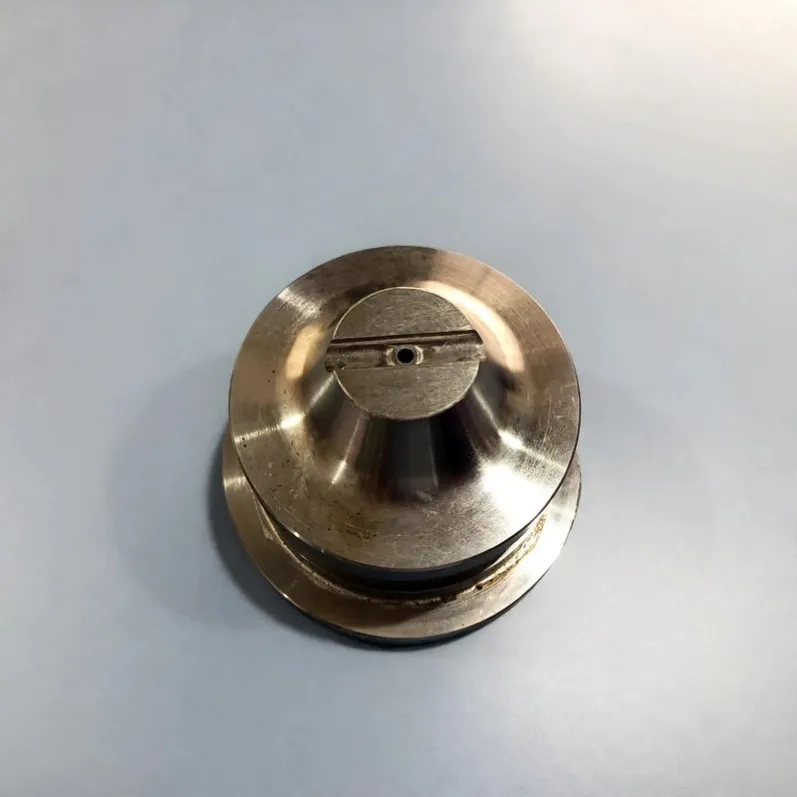
Custom-made to customer drawing. JST Machining provides precision CNC machining services. Send your drawing for a quote.
Step four, inspection and delivery. Parts are inspected against the drawing before they leave the factory, then delivered.
The evidence: the insert block itself.
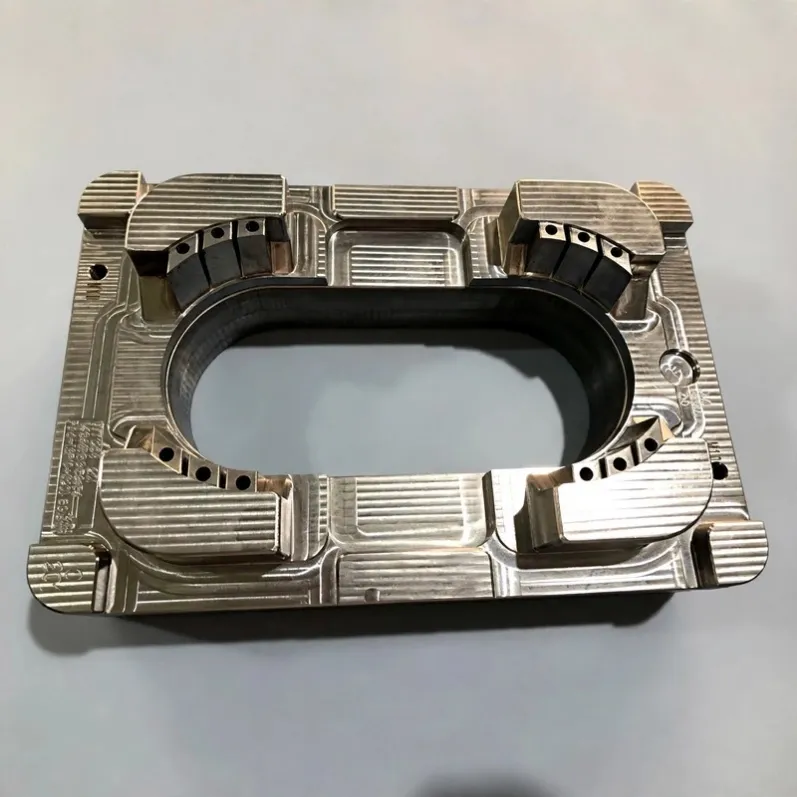
The CNC Milled Precision Mold Insert Block is the evidence for what this article promises. It is a large milled steel plate with an oval opening, milled cavities, ribs and a pattern of small holes — the kind of block that has to sit in a mould pocket and form plastic from its cavity. Its value is not the plate itself; it is that the cavity, the ribs and the locating faces are in the positions the drawing calls for. Look at it as the customer in this case would: the forming surfaces are where the plastic is shaped, the locating faces are where the block sits, and the holes are where it is fixed. If any of those is wrong, the mould shows it in every part. The same process makes the other parts in the Precision Mold Components category, including turned mould cores, and the same rule — the drawing decides, the fit is checked — applies to the CNC Turning Parts and Precision Fixtures & Jigs categories.
What you get, and what happens next.
The result you are buying is not a plate. It is an insert that fits the mould it was made for, checked before it is sent, so the trial is a confirmation and not a discovery. When that works, the next order is the same process again: a drawing, a review, a quote, machining, inspection, delivery. Injection moulds are made by JST Mould; this site is for the machining work, and the two are linked so a customer who needs a mould and its machined accessories deals with one group.
What we need from you, and what we will not guess.
We need the drawing, the material, the quantity and the critical dimensions. Material, tolerance, surface treatment and hardness are taken from your drawing — if they are not on the drawing, we ask you before machining. We do not invent a tolerance, substitute a material, or assume a treatment.
FAQ
Q: Do you make moulds as well as machined parts? A: Yes — injection moulds are made by JST Mould; see www.jstmold.com. This site is for the machining work.
Q: How do I get a quote? A: Send the drawing and quantity through the Contact page or to info@jstmould.com, and tell us the material and where the part is used.
Q: Can you make just one insert, or only batches? A: We make parts to customer drawing, one piece or a batch. Send the drawing and the quantity you need, and we will quote it.
Q: How do you make sure the insert will fit my mould? A: Fit is decided by the faces on your drawing — the cavity, the ribs and the locating faces. Parts are inspected against the drawing before they leave the factory.
Q: What if I have not decided the material yet? A: Say so in your enquiry. The options are discussed before machining, and the material is never chosen for you without asking.
Q: Can you also make the other accessories for my mould? A: Yes. Mould accessories are machined the same way, from your drawings, and JST Mould makes the moulds themselves — so one group covers both.
If your insert or mould component has to fit a mould you already run, send the drawing via the Contact page or to info@jstmould.com. We will review it, quote it, machine it and inspect it before delivery — starting from the drawing, not from a catalogue.